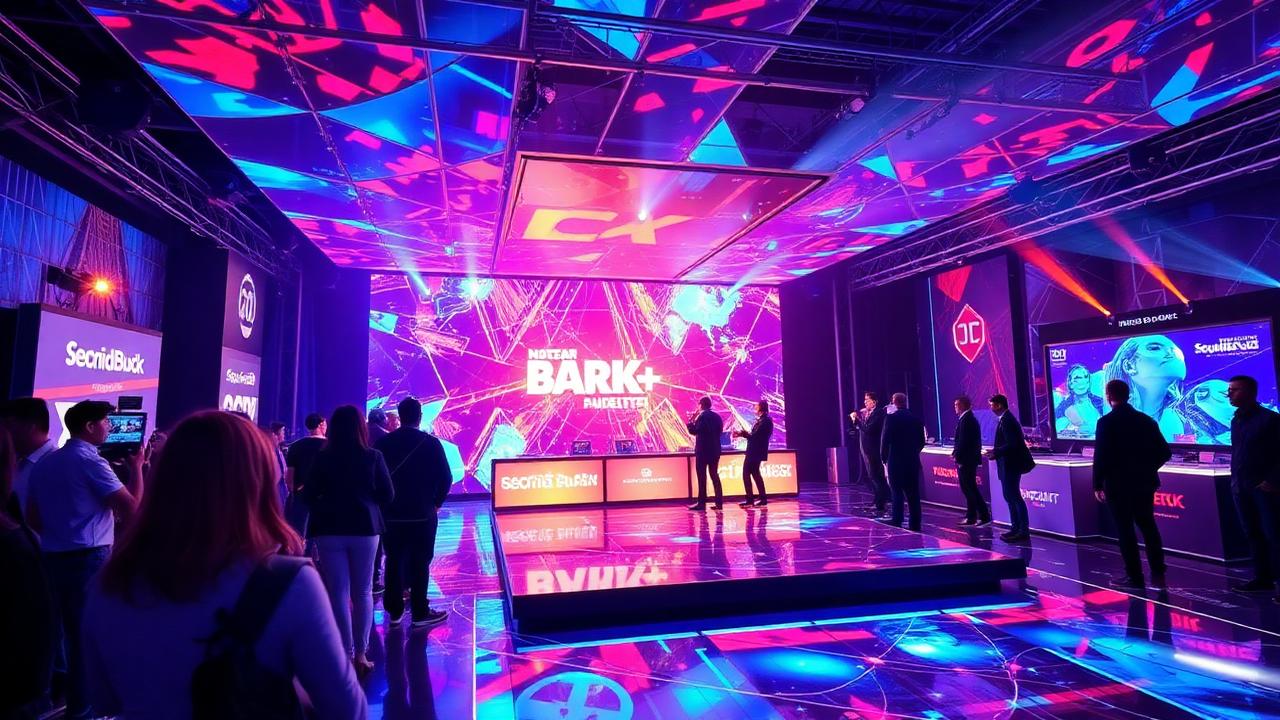
Live Marketing Trends 2025 — These 5 Trends Are Shaping the Industry
Key takeaways
- Hybrid events are here to stay — livestreams are now a standard component, not an add-on.
- Measurability has become the most important skill for producers: no data, no budget.
- Sustainable production has become a hygiene factor for B2B clients.
- Micro-activations (pop-ups, surprise campaigns) often deliver better ROI than single large events.
- AI-driven personalisation enables individual guest experiences even at 1,000+ person events.
Live marketing is going through a strong period of change. After the pandemic, people's craving for genuine encounters has grown even further, and companies have realised that a purely digital presence isn't enough. 2025 brings several exciting trends that are reshaping how we do promotions, events, and trade show marketing.
1. Hybrid events become standard. Combining physical and digital is no longer an experiment but the norm. The best events offer a meaningful experience to both on-site and remote participants. Live streaming, interactive Q&A sessions, and virtual trade show booths multiply an event's reach.
2. Data-driven live marketing. Instead of intuition, decisions are made based on data. Real-time encounter metrics, heat maps at trade show booths, and NPS surveys after events provide concrete insight into what works and what doesn't. This enables campaign optimisation on the fly.
3. Sustainability and responsibility. The events industry has traditionally produced a lot of waste — disposable trade show booths, printed materials, and plastic bags. In 2025, sustainability is a necessity, not an added bonus. Modular and reusable booth structures, digital materials, and carbon footprint offsetting are the new norm.
4. Experiential marketing. Simple product displays no longer suffice. Consumers and B2B clients seek experiences. Immersive installations, sensory marketing (scents, sounds, tactile surfaces), and gamification create encounters that stay in memory for weeks and months.
5. Community and participation. Brands are shifting from monologue to dialogue. Pop-up events where customers can participate in product development, community promotions, and user-generated content as part of events create deeper and more lasting brand relationships.
How do these trends work in practice? Companies need to think of live marketing as a strategic whole, not individual campaigns. Every encounter is part of a larger story, and the story must be consistent across all channels.
Kohtaamistoimisto Fridays actively follows industry developments and brings the latest trends into our clients' campaigns. Want to stay at the cutting edge? Follow our blog and get in touch — let's design future encounters together.
Frequently asked questions
What is the biggest live-marketing trend in 2026?+
Measurable attribution. Brands no longer accept 'the event went well' reporting. They require encounter, conversion and revenue figures, attributed to channel and campaign.
Have physical events lost their relevance?+
Quite the opposite. Post-pandemic, the value of physical encounters has risen — combined with digital reach. Pure physical or pure digital is no longer enough.
How is sustainability handled in event production?+
Reusable materials, local catering, modular booths, digital materials over printed, and carbon footprint accounting. Many B2B clients now require these in the RFP.
What does AI mean in event marketing in practice?+
Real-world applications include personal agendas, smart networking, real-time translation and per-attendee follow-up automation.