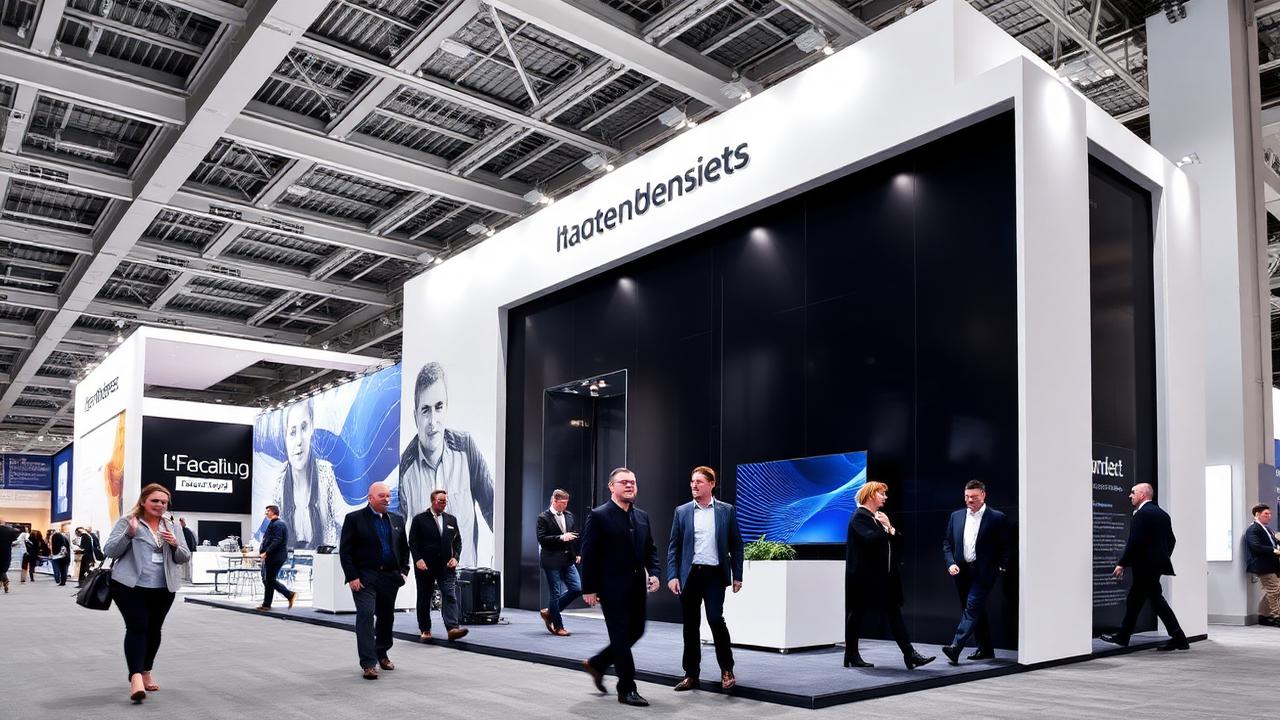
Trade Show Booth Design — How to Stand Out at Finland's Biggest Fairs
Key takeaways
- Set one measurable primary goal for the booth (leads, launch, or brand) — not three at once.
- Visuals direct the visitor's gaze and feet — design is behavioural engineering, not just aesthetics.
- An interactive element (game, VR, demo) multiplies dwell time at the booth.
- Staff must play an active, inviting role — never a passive waiting one.
- Following up within 24 hours doubles conversion compared to a week-long delay.
Trade fairs remain one of the most effective B2B marketing channels in Finland. Every year, thousands of companies participate in events at Helsinki Expo Centre, Tampere Exhibition and Sports Centre, and other venues, aiming to create new customer contacts, strengthen their brands, and showcase new products.
But how do you stand out when there are dozens or hundreds of competing companies in the same hall? It all starts with booth design.
The first step is setting a clear objective. Do you want to collect leads? Launch a new product? Strengthen your brand with a specific target group? The objective determines everything — booth design, staff roles, materials, and follow-up communication.
Visual appearance is what stops a fair visitor in their tracks. Large graphic surfaces, distinctive colours, and clear messaging are essential. But a merely "beautiful" booth isn't enough — it must guide visitor behaviour. Where does the visitor look first? Where do they walk? Where do they stop? All of this can be planned in advance.
Interactivity is the lifeblood of a modern trade show booth. Simply handing out brochures no longer works. Product demonstrations, digital demos, competitions, and activities draw people in and create lasting impressions. For example, a VR experience or gamification element can multiply visitor numbers compared to a traditional display.
Staff make or break the trade show experience. Professional booth staff are energetic, approachable, and skilled at telling the company's story naturally. They don't just stand behind the counter — they actively invite visitors in and build conversations.
Follow-up is an often-neglected but crucial phase. Collected contacts should be processed quickly — preferably within 24 hours of the fair. A personalised thank-you message and a concrete proposal for next steps distinguish professionals from amateurs.
Budgeting is also an important part of trade show planning. Booth construction, graphic design, staffing, travel, accommodation, and materials form a total cost that must be weighed against expected returns. ROI calculations help justify the investment to management.
Fridays has designed and built trade show booths for Finland's largest fairs for over a decade. We've seen what works and what doesn't. Want to stand out at your next trade show? Get in touch and let's design a booth that delivers results together.
Frequently asked questions
How much does building a trade-show booth cost in Finland?+
A basic 9–12 m² booth typically costs €4,000–8,000 turnkey. A custom premium booth ranges €15,000–50,000 depending on size, materials and technology.
How many staff are needed at a trade-show booth?+
Rule of thumb: one active person per 9 m², with a minimum of 2 to allow breaks. During peak hours or product launches you may double the headcount.
How is trade-show booth ROI calculated?+
ROI = (revenue from leads − total cost) / total cost. Good measurement requires lead quality scoring (A/B/C) and tracking for 6–12 months after the show.
When should booth planning start?+
For major trade shows, 4–6 months before the event. This allows venue booking, design iteration, staff training and marketing materials without rush.