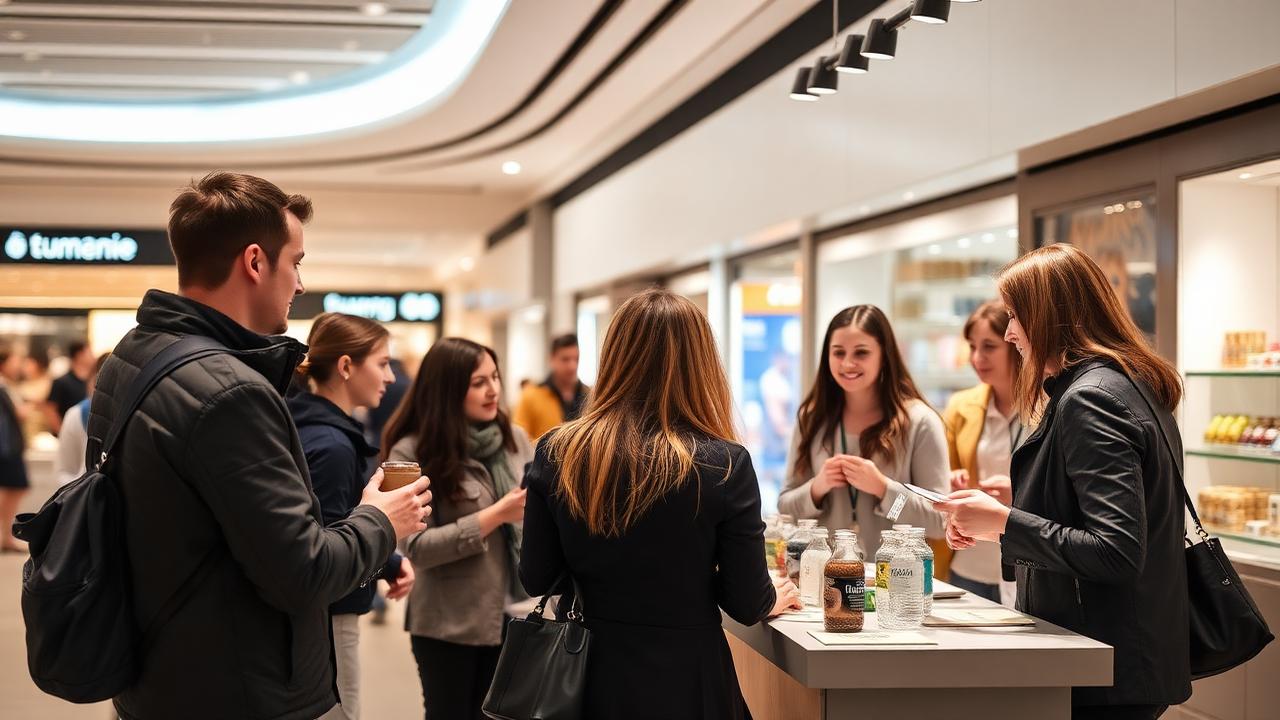
The Power of Promotions in Sales — Why Face-to-Face Still Works
Key takeaways
- Personal encounters remain the single strongest factor influencing purchase decisions.
- On-site product trials significantly lower the buying threshold, especially for new products.
- Promotion ROI is measured in encounters, trials and conversions — not visitor counts.
- Choose the location (mall, event, festival) based on the target audience, not raw footfall.
- Promoter training and briefing matter more than booth design for overall campaign quality.
Digital marketing has taken on an enormous role in corporate marketing strategies over the past decade. Yet face-to-face sales promotion — promotions — remains one of the most effective ways to create genuine connections between consumers and brands. Why is this the case, and how can businesses leverage promotions as part of their modern marketing mix?
First, promotions offer something that digital advertising cannot: a personal encounter. When a consumer meets a product or service representative face-to-face, trust and an emotional connection are created that no banner ad or social media post can replace. Studies show that personal recommendations remain one of the strongest factors influencing purchasing decisions.
Second, promotions enable hands-on product experience. A tasting in a store, a product demonstration at a trade fair, or an interactive demo at an event — all of these give consumers the opportunity to explore a product before making a purchase. This reduces the risk of buying and lowers the barrier to trying something new.
Third, a well-executed promotion creates buzz. People share their experiences on social media, talk to friends and colleagues. A single successful promotional campaign can generate hundreds or thousands of organic mentions and shares — for free.
So how do you execute a successful promotion? The key is the right team. Skilled promoters know how to approach people naturally, present products enthusiastically, and leave a positive impression. Their training and motivation determine the campaign's success.
Location selection is another critical factor. Shopping centres, events, festivals, and sports venues are excellent places to reach large numbers of potential customers. The location must match the target audience — a premium product shouldn't be promoted in the wrong environment.
Measurement is also essential. Modern promotions use digital tools to track results: how many encounters occurred, how many people tried the product, how many converted their interest into a purchase. A data-driven approach enables continuous optimisation.
Kohtaamistoimisto Fridays has built over a decade of experience in promotional operations that combine professional staff, strategic planning, and modern measurement. The result is campaigns that don't just get noticed — they sell.
Promotions aren't yesterday's marketing. They are tomorrow's marketing, where genuine encounters separate winners from the rest.
Frequently asked questions
How much does a promotional campaign cost in Finland?+
A one-day shopping-mall promotion with 2 promoters typically costs €800–1,500, including staff, briefing and reporting. Materials, decor and venue fees come on top. Longer roadshows start from €5,000.
How long does it take to plan a promotion campaign?+
A single-day activation is possible on 2 weeks' notice. A strategic multi-location campaign spread over several weeks usually needs 4–8 weeks for planning, venue bookings and staffing.
How are promotion results measured?+
Standard metrics include number of encounters, product trials, captured leads and conversion (e.g. purchases, downloads, sign-ups). Modern campaigns use QR codes and digital displays for accurate attribution.
What is the difference between a promoter and a brand ambassador?+
A promoter executes short-term activations and product demos. A brand ambassador represents the brand long-term, often across multiple channels, and carries deeper product knowledge and stakeholder relationships.